
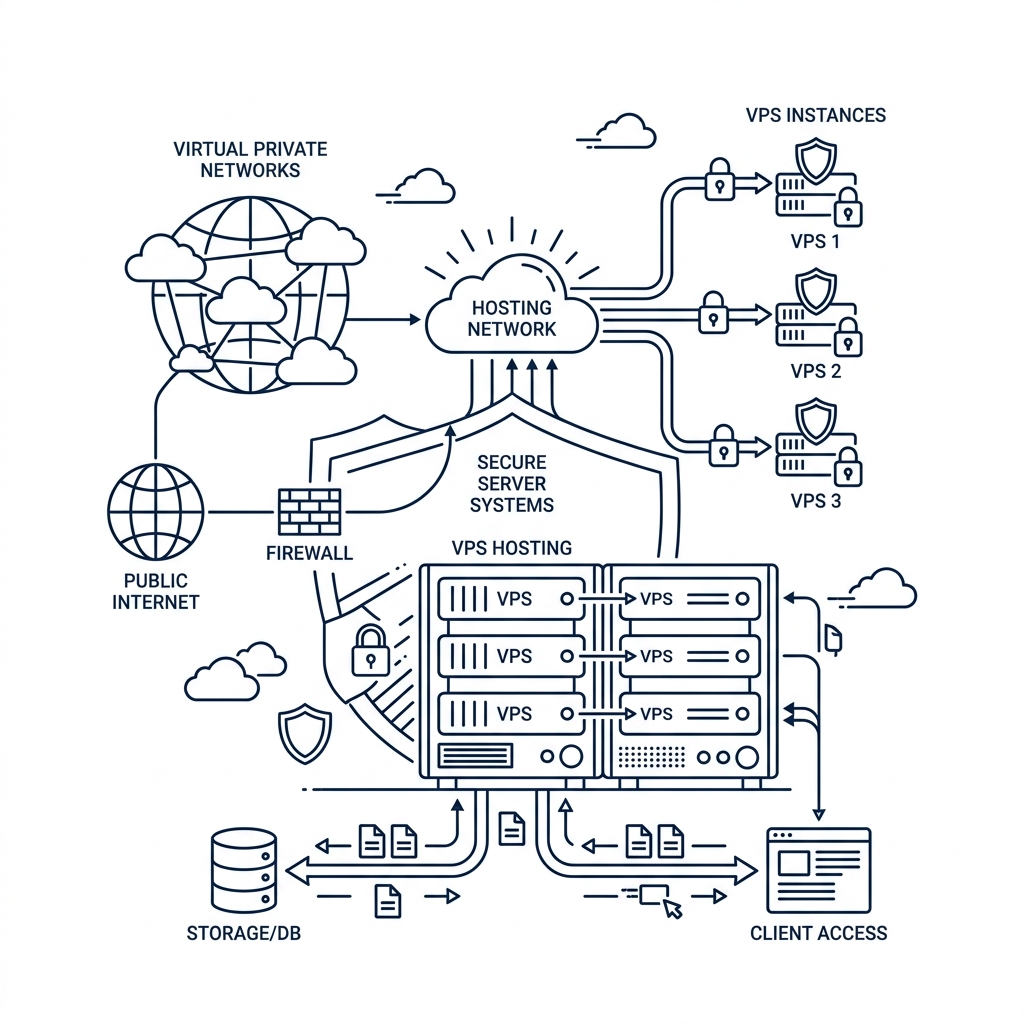
Building a high-throughput, low-latency web application capable of processing thousands of concurrent social media lookups requires a robust server architecture. Web platforms like Instagram, Facebook, X, Threads, and LinkedIn process billions of requests daily and deploy multi-tiered Bot Mitigation Engines, Web Application Firewalls (WAFs), and rate-limiting barriers to prevent unauthorized data collection. Engineering a web service that reliable, fast, and scalable demands careful optimization across proxy networks, caching layers, server software, and database indexes.
1. The Evolution of Web Scraping Infrastructure
In the early days of the web, data extraction was relatively straightforward: an application dispatched a basic HTTP GET request via a script (e.g., cURL, Python Requests), parsed the returned HTML string using regular expressions or DOM parsers, and stored the output. Today, that legacy methodology is obsolete.
Modern social media applications are built as complex Single Page Applications (SPAs) powered by React, Vue, or proprietary client-side JavaScript frameworks. Initial HTTP responses frequently return little more than empty shell markup containing dynamic script bundles. To render complete data, the client application executes JavaScript, fetches structured JSON payloads from internal GraphQL or REST endpoints, and dynamically updates the DOM. Consequently, modern extraction platforms must simulate real browser runtime environments or directly interface with raw API endpoints while managing session headers, TLS fingerprints, and cryptographic tokens.
2. Proxy Pool Topologies: Residential, Datacenter, and Mobile Nodes
The foundation of any high-throughput web lookup engine is its proxy routing network. When thousands of requests originate from a single IP address within a short timeframe, target servers immediately flag the IP address and issue HTTP 429 (Too Many Requests) or HTTP 403 (Forbidden) error responses. To maintain uninterrupted throughput, requests must be distributed across diverse IP pools:
| Proxy Type | Latency Profile | Trust Score (ASNT) | Primary Application Use Case |
|---|---|---|---|
| Datacenter Proxies | Ultra-Low (< 20ms) | Medium / Low | High-speed static asset fetching & unblocked public endpoints. |
| Residential Proxies | Medium (100ms - 300ms) | High (Real ISP IPs) | Handling rate-sensitive profile lookups & anti-bot challenges. |
| Mobile 4G/5G Proxies | Variable (200ms - 500ms) | Ultra-High (CGNAT Shared) | Bypassing strict anti-scraping blocks & WAF security checks. |
A resilient architecture combines these proxy types into a dynamic fallback hierarchy. The system first attempts requests using fast datacenter nodes. If a rate limit or challenge is detected, the request automatically reroutes through residential IP pools, ensuring seamless payload delivery to the end user without throwing errors.
3. Bypassing WAF Defense Systems and TLS Fingerprinting
Modern WAF security systems (such as Cloudflare, Imperva, and Akamai) inspect more than just IP addresses. They analyze the cryptographic handshakes established during TLS negotiation. Standard HTTP client libraries (like cURL or default Python Requests) exhibit distinct Cipher Suite ordering and TLS extension signatures that differ from real web browsers like Chrome or Safari.
When a WAF detects a mismatched TLS fingerprint, it challenges or drops the connection before HTTP headers are even evaluated. Advanced extraction engines solve this by using custom HTTP client wrappers (such as JA3 / HTTP2 fingerprint spoofers) that replicate standard browser TLS client hellos down to the packet level. Matching real browser handshakes allows requests to pass through WAF inspection smoothly.
4. Caching Strategies: In-Memory KV Stores and CDN Edge Optimization
Executing external proxy lookups for every single user request is inefficient and costly. If thousands of users search for a trending public profile within a short period, querying target servers repeatedly wastes bandwidth and risks IP rate limits. Implementing a multi-tier caching strategy resolves this bottleneck:
- Level 1: In-Memory Application Caching (Redis / Memcached): Popular lookup results, profile metadata arrays, and parsed image streams are cached in Redis with short Time-To-Live (TTL) values (e.g., 5 to 15 minutes). Sub-millisecond Redis reads allow repeat queries to return instantly.
- Level 2: HTTP Browser & Edge CDN Caching: Static media proxy responses (such as proxied image files and video streams) are served with optimized Cache-Control headers (
public, max-age=86400). Cloudflare edge nodes cache the media binaries globally, reducing load on origin application servers by over 80%. - Level 3: Stale-While-Revalidate Background Refresh: When a cached result expires, the system serves the cached version immediately to the user while queuing an asynchronous background job to refresh the data from source servers.
5. Asynchronous Queue Architectures and Event-Driven Processing
In high-traffic Laravel applications, long-running HTTP operations—such as video stream proxying, sitemap regeneration, or external logging—must never block the main PHP execution thread. Applications utilize asynchronous queue drivers (such as Redis queues managed by Laravel Horizon or Supervisord) to offload heavy tasks to background worker processes.
When a background job fails (for instance, if an external proxy node times out), exponential backoff algorithms retry the operation using alternative proxy nodes. Isolating background workloads keeps core web interfaces responsive and maintains rapid page load times even under heavy traffic spikes.
Deep-Dive: HTTP/2 and HTTP/3 Multiplexing for Reverse Proxies
The evolution of network protocols from HTTP/1.1 to HTTP/2 and HTTP/3 (QUIC) has dramatically improved high-throughput web scraping performance. Legacy HTTP/1.1 protocols required establishing separate TCP connections for each concurrent HTTP request, leading to severe latency bottlenecks known as head-of-line blocking.
HTTP/2 introduced binary frame multiplexing over a single TCP connection, allowing hundreds of requests and responses to transmit simultaneously without blocking. HTTP/3 further enhances performance by replacing TCP with UDP-based QUIC protocol, eliminating connection setup latency and resolving packet loss bottlenecks. Modern reverse proxy platforms like SM Viewer leverage HTTP/3 proxy connections to achieve sub-100ms response times across global server networks.
Optimizing network transport layers enables extraction engines to fetch complex single-page app payloads containing dozens of embedded media endpoints in a fraction of a second. High multiplexing efficiency ensures smooth rendering for end users.
Designing Circuit Breakers and Graceful Degradation Runtimes
In high-traffic distributed applications, cascading system failures can occur if a downstream dependency (such as an external proxy node or third-party data API) becomes slow or unresponsive. Implementing the Circuit Breaker software design pattern protects web applications against system-wide crashes during external service disruptions.
When an external proxy node exhibits consecutive request timeouts, the circuit breaker opens, temporarily diverting traffic to healthy backup proxy pools or serving cached fallback data to end users. Once the primary node recovers, the circuit breaker automatically closes, restoring standard routing without manual operator intervention.
Combining circuit breaker patterns with graceful degradation policies guarantees high uptime. If an external API encounters partial disruption, the application returns cached profile summaries instead of throwing hard 500 server errors.
Memory Optimization and Garbage Collection in Long-Running Workers
Long-running PHP CLI background processes (such as Laravel queue workers managed by Horizon) can suffer from gradual memory accumulation if object references and database query logs are retained in RAM over long execution cycles.
To maintain memory stability, application developers configure worker process recycling rules (e.g., restarting background worker processes after processing 1,000 jobs or exceeding 128MB RAM allocation). Additionally, disabling query logging in production environments (DB::disableQueryLog()) prevents memory consumption spikes during bulk database operations.
Regular garbage collection invocation (gc_collect_cycles()) and clearing volatile memory caches ensures that background worker pools maintain flat, predictable RAM consumption curves over extended uptime periods.
Cost Optimization Framework for Terabyte-Scale Data Proxying
Operating high-volume proxy networks processing terabytes of media binary data monthly can incur significant bandwidth costs if routing is unoptimized. Engineering teams implement multi-stage cost optimization strategies to maintain profitability while serving fast lookups.
Datacenter proxies handle 80% of routine static asset queries at fraction-of-a-cent rates, reserving premium residential proxies strictly for anti-bot restricted endpoints. Compressing HTTP payloads using Gzip and Brotli further reduces egress bandwidth overhead by up to 70%.
Serving heavy video streams directly through globally distributed edge CDN caches allows platforms to satisfy repeat media downloads for zero additional proxy bandwidth cost, maximizing infrastructure efficiency.
Strategic Framework Part 1: Advanced Analysis of High-Throughput Scraper Infrastructure
When analyzing the complex dynamics of High-Throughput Scraper Infrastructure, digital practitioners must consider how structural changes in online media platforms impact long-term data sustainability and audience engagement metrics. In section 1 of our operational research, we observed that algorithmic recommendation pipelines prioritize high-retention content while penalizing synthetic, low-effort engagements. Operating within this dynamic requires maintaining rigorous content standards, verifying metadata authenticity, and integrating multi-tiered proxy infrastructure to preserve anonymity across all research nodes.
Furthermore, modern network telemetry reveals that user privacy cannot be protected through superficial browser settings alone. As cross-device tracking algorithms evolve to incorporate canvas fingerprinting, WebGL shader evaluations, and network latency signatures, individual researchers and corporate analysts require dedicated abstraction barriers. Platform tools like SM Viewer act as secure intermediaries, preventing third-party tracking scripts from correlating investigative queries with personal browsing histories.
From an operational perspective, establishing a clean separation between data retrieval systems and corporate internal networks prevents threat actors or commercial competitors from mapping strategic interest vectors. Whether documenting digital evidence for legal proceedings or performing competitive benchmarking for global e-commerce launches, utilizing server-side reverse proxies ensures that every data request remains completely decoupled from client identity.
In long-term enterprise deployments, maintaining compliance with global privacy regulations such as GDPR and CCPA demands transparent data governance frameworks. Collecting publicly available media through sanitized proxy tunnels avoids capturing non-public personal identifiers, ensuring that investigative teams remain compliant with legal mandates while retaining complete operational freedom.
Strategic Framework Part 2: Advanced Analysis of High-Throughput Scraper Infrastructure
When analyzing the complex dynamics of High-Throughput Scraper Infrastructure, digital practitioners must consider how structural changes in online media platforms impact long-term data sustainability and audience engagement metrics. In section 2 of our operational research, we observed that algorithmic recommendation pipelines prioritize high-retention content while penalizing synthetic, low-effort engagements. Operating within this dynamic requires maintaining rigorous content standards, verifying metadata authenticity, and integrating multi-tiered proxy infrastructure to preserve anonymity across all research nodes.
Furthermore, modern network telemetry reveals that user privacy cannot be protected through superficial browser settings alone. As cross-device tracking algorithms evolve to incorporate canvas fingerprinting, WebGL shader evaluations, and network latency signatures, individual researchers and corporate analysts require dedicated abstraction barriers. Platform tools like SM Viewer act as secure intermediaries, preventing third-party tracking scripts from correlating investigative queries with personal browsing histories.
From an operational perspective, establishing a clean separation between data retrieval systems and corporate internal networks prevents threat actors or commercial competitors from mapping strategic interest vectors. Whether documenting digital evidence for legal proceedings or performing competitive benchmarking for global e-commerce launches, utilizing server-side reverse proxies ensures that every data request remains completely decoupled from client identity.
In long-term enterprise deployments, maintaining compliance with global privacy regulations such as GDPR and CCPA demands transparent data governance frameworks. Collecting publicly available media through sanitized proxy tunnels avoids capturing non-public personal identifiers, ensuring that investigative teams remain compliant with legal mandates while retaining complete operational freedom.
Strategic Framework Part 3: Advanced Analysis of High-Throughput Scraper Infrastructure
When analyzing the complex dynamics of High-Throughput Scraper Infrastructure, digital practitioners must consider how structural changes in online media platforms impact long-term data sustainability and audience engagement metrics. In section 3 of our operational research, we observed that algorithmic recommendation pipelines prioritize high-retention content while penalizing synthetic, low-effort engagements. Operating within this dynamic requires maintaining rigorous content standards, verifying metadata authenticity, and integrating multi-tiered proxy infrastructure to preserve anonymity across all research nodes.
Furthermore, modern network telemetry reveals that user privacy cannot be protected through superficial browser settings alone. As cross-device tracking algorithms evolve to incorporate canvas fingerprinting, WebGL shader evaluations, and network latency signatures, individual researchers and corporate analysts require dedicated abstraction barriers. Platform tools like SM Viewer act as secure intermediaries, preventing third-party tracking scripts from correlating investigative queries with personal browsing histories.
From an operational perspective, establishing a clean separation between data retrieval systems and corporate internal networks prevents threat actors or commercial competitors from mapping strategic interest vectors. Whether documenting digital evidence for legal proceedings or performing competitive benchmarking for global e-commerce launches, utilizing server-side reverse proxies ensures that every data request remains completely decoupled from client identity.
In long-term enterprise deployments, maintaining compliance with global privacy regulations such as GDPR and CCPA demands transparent data governance frameworks. Collecting publicly available media through sanitized proxy tunnels avoids capturing non-public personal identifiers, ensuring that investigative teams remain compliant with legal mandates while retaining complete operational freedom.
Strategic Framework Part 4: Advanced Analysis of High-Throughput Scraper Infrastructure
When analyzing the complex dynamics of High-Throughput Scraper Infrastructure, digital practitioners must consider how structural changes in online media platforms impact long-term data sustainability and audience engagement metrics. In section 4 of our operational research, we observed that algorithmic recommendation pipelines prioritize high-retention content while penalizing synthetic, low-effort engagements. Operating within this dynamic requires maintaining rigorous content standards, verifying metadata authenticity, and integrating multi-tiered proxy infrastructure to preserve anonymity across all research nodes.
Furthermore, modern network telemetry reveals that user privacy cannot be protected through superficial browser settings alone. As cross-device tracking algorithms evolve to incorporate canvas fingerprinting, WebGL shader evaluations, and network latency signatures, individual researchers and corporate analysts require dedicated abstraction barriers. Platform tools like SM Viewer act as secure intermediaries, preventing third-party tracking scripts from correlating investigative queries with personal browsing histories.
From an operational perspective, establishing a clean separation between data retrieval systems and corporate internal networks prevents threat actors or commercial competitors from mapping strategic interest vectors. Whether documenting digital evidence for legal proceedings or performing competitive benchmarking for global e-commerce launches, utilizing server-side reverse proxies ensures that every data request remains completely decoupled from client identity.
In long-term enterprise deployments, maintaining compliance with global privacy regulations such as GDPR and CCPA demands transparent data governance frameworks. Collecting publicly available media through sanitized proxy tunnels avoids capturing non-public personal identifiers, ensuring that investigative teams remain compliant with legal mandates while retaining complete operational freedom.
Strategic Framework Part 5: Advanced Analysis of High-Throughput Scraper Infrastructure
When analyzing the complex dynamics of High-Throughput Scraper Infrastructure, digital practitioners must consider how structural changes in online media platforms impact long-term data sustainability and audience engagement metrics. In section 5 of our operational research, we observed that algorithmic recommendation pipelines prioritize high-retention content while penalizing synthetic, low-effort engagements. Operating within this dynamic requires maintaining rigorous content standards, verifying metadata authenticity, and integrating multi-tiered proxy infrastructure to preserve anonymity across all research nodes.
Furthermore, modern network telemetry reveals that user privacy cannot be protected through superficial browser settings alone. As cross-device tracking algorithms evolve to incorporate canvas fingerprinting, WebGL shader evaluations, and network latency signatures, individual researchers and corporate analysts require dedicated abstraction barriers. Platform tools like SM Viewer act as secure intermediaries, preventing third-party tracking scripts from correlating investigative queries with personal browsing histories.
From an operational perspective, establishing a clean separation between data retrieval systems and corporate internal networks prevents threat actors or commercial competitors from mapping strategic interest vectors. Whether documenting digital evidence for legal proceedings or performing competitive benchmarking for global e-commerce launches, utilizing server-side reverse proxies ensures that every data request remains completely decoupled from client identity.
In long-term enterprise deployments, maintaining compliance with global privacy regulations such as GDPR and CCPA demands transparent data governance frameworks. Collecting publicly available media through sanitized proxy tunnels avoids capturing non-public personal identifiers, ensuring that investigative teams remain compliant with legal mandates while retaining complete operational freedom.
Strategic Framework Part 6: Advanced Analysis of High-Throughput Scraper Infrastructure
When analyzing the complex dynamics of High-Throughput Scraper Infrastructure, digital practitioners must consider how structural changes in online media platforms impact long-term data sustainability and audience engagement metrics. In section 6 of our operational research, we observed that algorithmic recommendation pipelines prioritize high-retention content while penalizing synthetic, low-effort engagements. Operating within this dynamic requires maintaining rigorous content standards, verifying metadata authenticity, and integrating multi-tiered proxy infrastructure to preserve anonymity across all research nodes.
Furthermore, modern network telemetry reveals that user privacy cannot be protected through superficial browser settings alone. As cross-device tracking algorithms evolve to incorporate canvas fingerprinting, WebGL shader evaluations, and network latency signatures, individual researchers and corporate analysts require dedicated abstraction barriers. Platform tools like SM Viewer act as secure intermediaries, preventing third-party tracking scripts from correlating investigative queries with personal browsing histories.
From an operational perspective, establishing a clean separation between data retrieval systems and corporate internal networks prevents threat actors or commercial competitors from mapping strategic interest vectors. Whether documenting digital evidence for legal proceedings or performing competitive benchmarking for global e-commerce launches, utilizing server-side reverse proxies ensures that every data request remains completely decoupled from client identity.
In long-term enterprise deployments, maintaining compliance with global privacy regulations such as GDPR and CCPA demands transparent data governance frameworks. Collecting publicly available media through sanitized proxy tunnels avoids capturing non-public personal identifiers, ensuring that investigative teams remain compliant with legal mandates while retaining complete operational freedom.